

Kids Intelligent Master
Child learning pathways
guided under adult authority
Structured, developmentally appropriate learning support operating within supervised, institution-led environments.
Measured Conditions
Child learning environments, measured and protected
Children experience education within environments shaped by cognitive development, emotional context, supervision, and trust. Learning systems designed for children must account for these factors to support healthy understanding, curiosity, and long-term educational outcomes.
Digital learning tools are now widely present across classrooms, homes, and educational programs. Their use in child learning environments requires alignment with age-appropriate pedagogy, clear supervision structures, and institutional responsibility.
Research consistently distinguishes between access to learning content and the conditions under which learning is effective. For children, structured guidance, continuity, and adult involvement play a central role in how digital tools support comprehension and engagement.
As structured intelligence systems are introduced into child-focused education, their operation must remain observable, explainable, and aligned with human-led educational practice. Systems designed for early learning function best when boundaries, roles, and oversight are clearly defined.
KIM is grounded in these observed conditions. Its design reflects established child development principles and institution-led education practices, rather than assumptions about autonomy or self-directed intelligence in early learning environments.
International guidance on artificial intelligence and children emphasizes child-centered design, educator and guardian involvement, and accountable deployment within formal learning systems. (UNESCO — Artificial Intelligence and Children)
Within the DIPA framework, these principles guide how KIM supports learning: as a supervised, explainable, and developmentally appropriate educational system operating within institution-defined boundaries.
Observed child learning priorities
Global education and child protection frameworks consistently identify safety, supervision, and developmental alignment as prerequisites for effective learning in digital environments. These priorities define the baseline conditions under which child-facing educational systems must operate.
Developmental appropriateness is central. Learning support for children must reflect cognitive and emotional stages, rather than applying generalized intelligence models without age-sensitive structure.
Guardian and educator authority remains essential. Adults retain full oversight and responsibility for learning environments, content scope, and the boundaries within which educational support is provided.
Supervision and transparency are equally required. Child-facing systems must remain explainable, reviewable, and designed to prevent inappropriate exposure, manipulation, or unintended influence over developing learners.
Supporting research, child safety principles, and ethical guidance are detailed within official KIM documentation and aligned education research materials.
Context
Learning and care, across many everyday settings
Childhood development does not occur in one place
Childhood learning unfolds across many environments: formal classrooms with trained educators, homes shaped by family routines, and community spaces where caregivers do their best with the resources available.
These variations are not exceptions — they are the ordinary reality of childhood across cultures and societies. Access to structured early education and professional support remains uneven in many regions.
Structure matters more than exposure
Children benefit most not from information alone, but from stability: clear routines, age-appropriate guidance, repetition, and trusted human presence over time.
The question is not whether environments are perfect. The question is how public systems can help ensure that children remain connected to durable educational foundations across diverse daily circumstances.
Caregivers are central, even without formal training
In many situations, parents and everyday caregivers are not trained teachers, yet they play a central role in a child’s development. They are present in the small moments where learning becomes part of life.
Public education systems cannot extend professional instruction into every home — but they can provide frameworks of support that help learning remain guided rather than fragmented.
KIM extends institutional continuity into everyday life
Within institutionally governed education environments, KIM is designed to support this reality: extending structured, curriculum-aligned, developmentally appropriate learning guidance into everyday settings, while remaining fully under the authority of educators and public educational governance.
This is not an alternative to schools, teachers, or families. It is a continuity layer — connecting informal care environments back to the standards and safeguards defined by institutions.
A companion shaped by trust, not autonomy
In this way, KIM functions as a supportive learning companion within public systems: reinforcing consistency, reassurance, and structure across diverse childhood environments, while keeping educators, families, and institutions at the center.
Purpose
What KIM Is and Why It Exists
KIM is a child-focused learning system developed within the DIPA framework to support structured education in supervised, real-world learning environments. It is designed for use where children learn with guidance from educators, caregivers, and institutions.
Its role is simple and defined: to provide clear, age-appropriate explanations that support understanding within an ongoing learning context. KIM does not replace teaching, direct learning, or extend beyond the activity in which it is used.
Interaction is finite and purpose-specific. Learning sessions begin and end within defined educational settings, without continuous engagement, optimization, or system-driven progression.
KIM is designed to fit into existing learning environments rather than reshape them. It supports continuity, clarity, and reinforcement while keeping educators and caregivers at the center of the learning process.
In this way, KIM functions as a steady learning support layer within DIPA — contributing to structured education without extending beyond its role.
Design commitments
KIM is built as calm, bounded learning infrastructure for children, shaped by real educational use rather than engagement-driven design.
It operates within supervised environments and can function without continuous connectivity, supporting schools, community programs, and structured learning settings where stability is essential.
Its scope remains developmentally aligned. Explanations, tone, and interaction depth are designed to match childhood learning stages rather than generalized intelligence models.
Interaction remains guided. Where situations fall outside normal learning scope, continuation depends on educator or caregiver input, keeping learning connected to real-world context.
KIM is used within institution-led and public-interest education environments, including schools, NGOs, and humanitarian learning programs.
Together, these commitments ensure that KIM supports learning as part of a broader educational setting — consistent, bounded, and shaped by human guidance.
Boundaries
What KIM Is Not
KIM is intentionally limited in scope. It exists to support learning within institution-led and adult-supervised environments, not to replace educators, caregivers, or educational responsibility.
KIM does not perform behavioral shaping, emotional assessment, attention optimization, or persuasive interaction. Its role is confined to explanation and structured learning support within boundaries defined by educators, guardians, and institutions.
These limits ensure that KIM functions as child-focused educational infrastructure within the DIPA framework, rather than as a system that influences behavior, exercises authority, or substitutes human judgment.
Explicit exclusions
KIM does not replace educators or caregivers, does not assess or profile children, does not optimize engagement, and does not make decisions about learning outcomes. Its role remains limited to structured explanation within guided learning contexts.
Operation
Operational Behavior
KIM operates as a bounded learning system designed to support children through structure rather than monitoring or behavioral control. Its operation is defined by clear limits, guided interaction, and context-based use within learning environments.
Learning interactions are time-bound and purpose-specific. The system does not rely on persistent observation, engagement optimization, or adaptive influence to function.
Interaction occurs only within defined conditions. Learning sessions remain finite, and continuation depends on the surrounding learning activity rather than system-driven progression.
Under uncertainty or boundary conditions, interaction does not continue. It pauses, ensuring that learning remains guided and does not extend beyond its intended scope.
KIM does not initiate activity independently and does not expand beyond its role. It remains limited to structured explanation and guided understanding within defined learning contexts.
Core characteristics
No behavioral or emotional inference. KIM does not assess, classify, or interpret psychological or emotional states.
No engagement optimization. It does not attempt to maximize usage, retention, or attention through persuasive or reinforcing patterns.
No profiling or prediction. Interaction is not based on behavioral modeling or user analysis.
No role expansion. KIM does not evolve into monitoring, evaluation, or decision-making functions beyond learning support.
No dependency on continuous connectivity. It can operate without centralized platforms where required.
Learning remains separate from evaluation. KIM does not assign outcomes, make determinations, or influence decisions about learners.
These conditions ensure consistent operation: predictable, limited in scope, and aligned with structured learning environments.
Deployment
Institutional Deployment Contexts
KIM is designed for supervised, institution-led learning environments where children’s education is governed by explicit adult authority and formal educational responsibility. It is not intended for unsupervised, self-directed, or consumer-oriented use.
Within approved settings, KIM functions as a transparent learning support layer. It assists with explanation and structured understanding while remaining subordinate to educator judgment, institutional policy, and defined operational boundaries.
Deployment is treated as an institutional condition rather than a one-time approval. Readiness, supervision capacity, and governance alignment are continuously assessed, allowing institutions to introduce, adjust, pause, or withdraw use over time without shifting responsibility onto the system.
Approved institutional settings
In practice, KIM is intended for environments where adult supervision, educational responsibility, and institutional governance are explicit and continuously present.
Schools and formal classrooms remain the primary context, operating under established teacher authority and institutional oversight.
Structured learning centers and public libraries may also provide appropriate supervised environments, particularly within non-profit or public-interest education programs.
In some cases, supervised home-learning arrangements may be supported where institutional guidance and caregiver oversight remain clearly defined and accountable.
Humanitarian and NGO education initiatives may also deploy KIM within formal program structures, especially where continuity of learning must be preserved under constrained conditions.
Finally, special-needs and assisted learning environments may benefit from structured, calm learning support where continuous adult involvement is essential.
Across all contexts, the governing condition remains the same: KIM is child-facing educational infrastructure only where supervision, institutional responsibility, and adult authority are present.
Boundary
Guardian Switch (GS)
Guardian Switch (GS) is a boundary-enforcement mechanism within KIM. It determines whether interaction may occur based on predefined conditions defined outside the system.
GS does not interpret content, assess intent, or make decisions. It operates as a deterministic switch that permits, restricts, or blocks interaction according to fixed rules.
In child learning environments, GS ensures that interaction takes place only within appropriate and supervised conditions. When these conditions are not met, interaction does not proceed.
The system does not attempt to resolve uncertainty or extend interaction beyond its defined scope. Instead, GS enforces boundaries at the point of interaction, preventing unsafe or unapproved continuation.
GS operates independently of learning logic. It does not adapt through usage, does not observe behavior, and does not evolve its function over time.
Its role is structural: to enforce boundaries without interpretation, monitoring, or influence.
Interaction outcomes
Interaction proceeds when conditions are valid and within scope.
Interaction is restricted when conditions are incomplete or require controlled handling.
Interaction is blocked when boundaries are not satisfied.
These outcomes are fixed and predictable. They do not depend on context interpretation, behavioral analysis, or system discretion.
In practice
How KIM is introduced
KIM is introduced within real learning settings, where children are already engaged in guided activities with teachers, caregivers, or structured programs.
It begins with a simple step: defining the learning activity. KIM is used to support a specific topic, lesson, or moment of understanding, rather than as a continuous or open-ended system.
Early use is typically small and focused. KIM is introduced in limited contexts where learning goals are clear and interaction can remain observed, guided, and easy to manage.
Over time, use may expand naturally as familiarity grows, but always within structured learning situations rather than through continuous or self-directed use.
In this sense, KIM is not “adopted” as a platform. It becomes part of everyday learning activity, supporting explanation and understanding where it is helpful.
Example
A classroom moment
In a classroom or guided learning setting, KIM is used as a simple support tool within an ongoing activity.

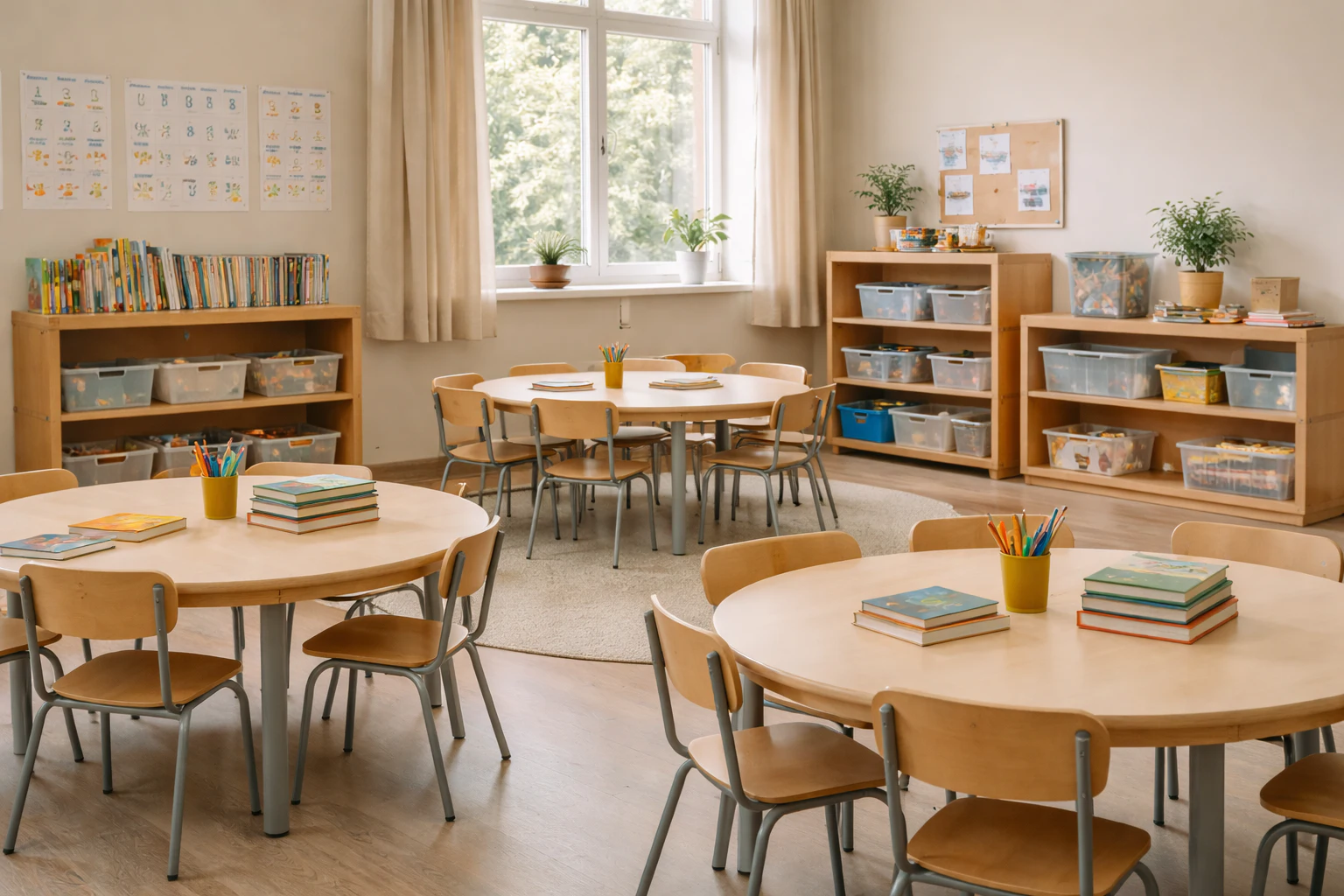
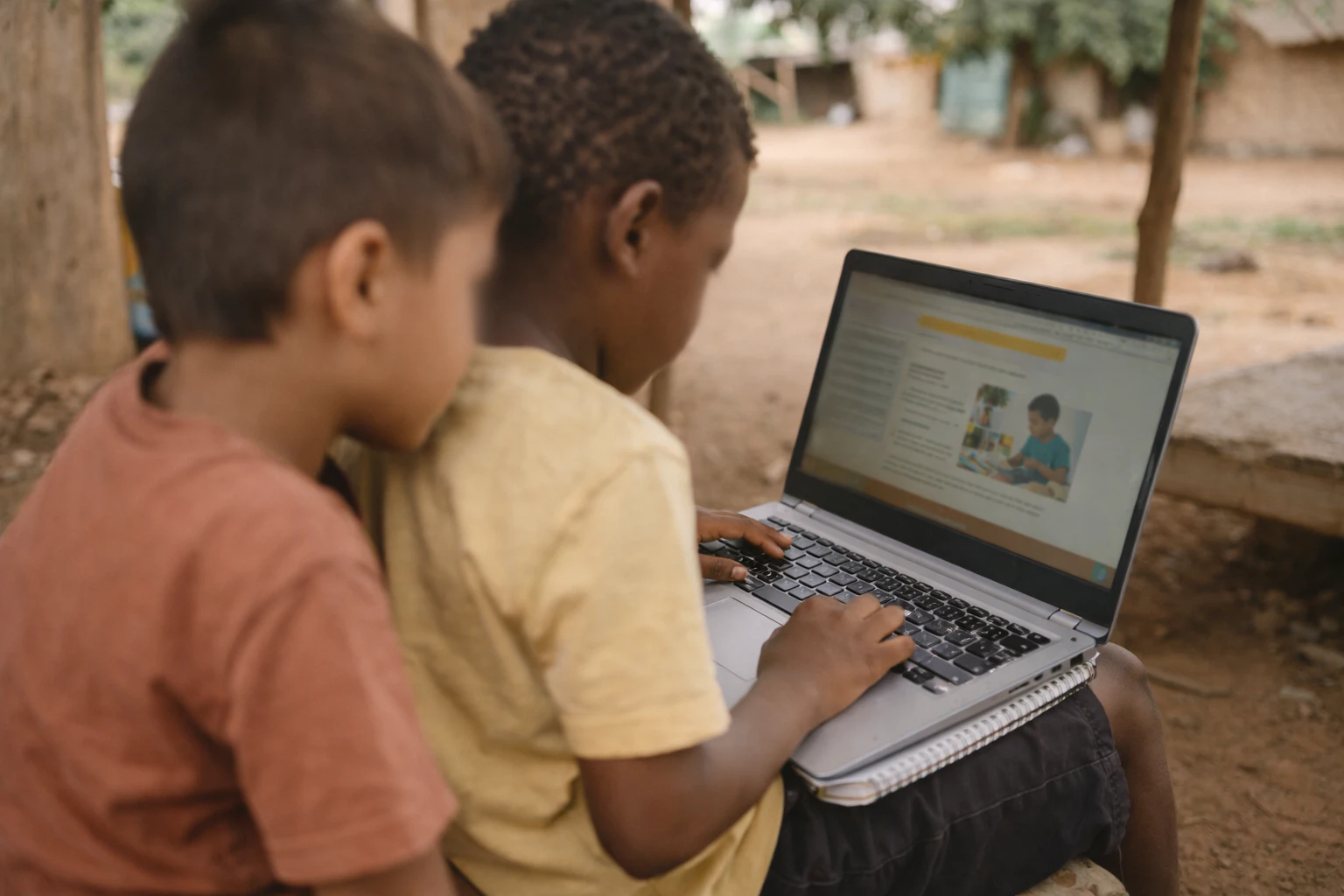
The teacher or caregiver defines the activity and sets the learning direction. KIM may be used to explain a concept, answer a question, or help clarify understanding within that moment.
Its role remains simple and contained. KIM does not guide the lesson, assign tasks, or evaluate progress. It supports explanation while learning remains led by the educator or caregiver.
When the activity ends, KIM’s role ends with it. Learning continues through normal teaching, practice, and interaction, without reliance on the system.
Ecosystem
KIM within the DIPA Ecosystem
KIM operates as a child-facing learning system within the DIPA framework — a structured public digital environment where different roles are clearly separated across systems.
Within this environment, KIM is limited to structured explanation and guided understanding for children. It does not function independently and does not extend beyond its defined learning role.
Interaction through KIM takes place within a broader system context, where coordination, access, and system conditions are handled outside the learning layer. This separation allows KIM to remain focused on learning while operating within a stable and consistent environment.
This positioning ensures that KIM remains a dedicated learning component rather than a standalone system. It operates as part of a larger structure designed for continuity, clarity of roles, and long-term institutional use.
The internal architecture of KIM is intentionally layered. Each function — interaction, teaching logic, safety control, and governance — operates within a separate and auditable layer. This structure allows learning, safety enforcement, and institutional oversight to remain clearly separated while functioning together as a protected educational system.
View learning system architecture
KIM System Architecture
The KIM system is built as a layered architecture. Each layer performs a specific role within the learning environment, allowing interaction, pedagogical logic, safety enforcement, and governance to remain clearly separated while operating together within a protected educational system.
Child Interaction Layer
Handles the direct interaction between the child and the system. This includes voice input, spoken responses, simple visual cues, session time limits, and sensory interaction signals.
The interface is intentionally simple and non-anthropomorphic, preventing dependency-forming interactions while maintaining clear educational communication.
Pedagogical Engine
The pedagogical engine manages how lessons are structured and delivered. It applies age-appropriate learning models including repetition, concept scaffolding, and guided progression across literacy, numeracy, and foundational knowledge areas.
Learning progression adapts based on success or difficulty, while remaining bounded within predefined educational pathways.
Reasoning & Safety Engine
This layer enforces strict operational boundaries for the system. It evaluates incoming queries, applies topic restrictions, and checks model confidence thresholds.
If uncertainty or risk is detected, the system halts or redirects interaction rather than attempting autonomous reasoning outside its educational scope.
Content Engine
Stores the curated knowledge used by the system including lessons, stories, phonics modules, and numeracy exercises.
All content is versioned, institutionally curated, and updated through signed packages to ensure educational quality and safety.
Local Profile & Memory Store
Stores minimal local learning data such as session progress, curriculum stage, and guardian configuration settings.
All storage is encrypted and operates without behavioral profiling, psychological inference, or data monetization.
Audit & Consent Engine
Maintains immutable logs recording system events such as configuration changes, permission updates, learning milestones, and content updates.
These records ensure institutional oversight and long-term auditability of system behavior.
Sync & Update Module (Optional)
Provides optional synchronization with institutional systems for content updates and integrity verification.
No behavioral or personal child data is transmitted. Cloud interaction remains opt-in and auditable.

DIPA Framework
The public digital infrastructure framework defining governance, role separation, and long-horizon institutional deployment.
LEARN MORE →
Ecosystem
The broader system landscape operating within the public infrastructure framework.
LEARN MORE →
System Architecture
The structural blueprint describing how systems are separated and coordinated.
LEARN MORE →
ICI
Interface and coordination layer connecting systems across the ecosystem.
LEARN MORE →
Governance
Oversight models and institutional structures across public systems.
LEARN MORE →Learning
Learning Domains
KIM supports foundational learning areas where structured explanation, guided understanding, and steady reinforcement help children build confidence over time.
Its role across these domains is consistent: to clarify concepts, provide simple examples, and support understanding within an ongoing learning context.
Core learning areas
Literacy and language support includes early reading, vocabulary development, comprehension, and basic expression, aligned with age-appropriate learning stages.
Numeracy and foundational mathematics covers basic number understanding, patterns, and simple problem-solving within structured learning activities.
General science understanding introduces everyday concepts through simple explanations and curiosity-led exploration, without extending into experimentation or advanced instruction.
Digital literacy helps children understand safe and responsible interaction with information and technology in a clear, age-appropriate way.
Foundational civic and ethical awareness may be supported through simple, guided discussion where appropriate to the learning context.
Across these domains, KIM supports review, reinforcement, and clarification of existing lessons, helping children revisit and understand concepts without replacing teaching or instruction.
Lifecycle
Roadmap Phases
KIM progresses through clear build-and-validate phases. The goal is not fast rollout, but proving safe, offline, child-appropriate learning support in real settings before expanding scope.
Each phase has a simple question: does the system work safely, predictably, and usefully under real conditions? Progress happens when the answer is “yes,” supported by evidence from pilots, testing, and operational readiness.
Phase 1 — MVP Prototype (prove the core)
Build the smallest real KIM unit that demonstrates offline operation, child-appropriate interaction, Guardian Switch control, and zero surveillance—without cloud inference, telemetry, or remote monitoring. The MVP focuses on a limited learning set (early literacy, early numeracy, simple stories) plus a hard safety engine and local guardian panel.
A practical MVP build plan targets a short cycle (hardware + offline voice + safety rules + guardian UI), followed by testing and fixes.
Phase 2 — System Hardening (make it durable)
Stabilize the full layered architecture so each part is isolated, auditable, and consistent: interaction layer, pedagogical engine, reasoning & safety engine, content engine, local memory store, audit/consent layer, and (optionally) update mechanisms.
This phase strengthens predictable behavior: strict topic boundaries, confidence thresholds, safe fallback responses, and clear “pause/hand-off” behavior under uncertainty.
Phase 3 — Controlled Pilots (learn from real use)
Run small pilots (for example, a limited number of devices) in supervised school or home-learning settings with simple incident reporting and structured feedback. Measure safety reliability, usability, guardian confidence, and evaluable learning benefit—without turning the system into an analytics product.
Phase 4 — Localization & Curriculum Alignment (expand carefully)
After the MVP is proven, expand by adding language support, curriculum mapping, and content packages— keeping the same offline-first posture and bounded learning design.
Content remains versioned and curated, with controlled update pathways and integrity checks rather than open-ended live expansion.
Phase 5 — Institutional Readiness (deployment patterns)
Establish repeatable deployment patterns for schools, NGOs, learning centers, and related institutional contexts: setup guides, safe operating defaults, support procedures, and review-ready documentation. KIM remains a protected learning environment rather than a consumer app model.
Phase 6 — Next Horizon (only after success)
Long-horizon expansion follows only if earlier phases succeed: multilingual growth, classroom variants, device redesign, deeper research work, and broader institutional partnerships—without changing the core constraints that keep KIM calm, offline-capable, and non-surveillance by design.
The roadmap is intentionally evidence-led: each phase exists to prove stability and suitability before adding more capability.
Lifecycle
Deployment & Lifecycle
KIM is introduced and used within real learning environments over time, rather than as a one-time setup or static system.
Before use begins, the learning context is defined: where KIM will be used, what it will support, and how it fits into existing educational activity. This ensures that interaction starts within a clear and appropriate setting.
During use, KIM operates within that context. Learning sessions remain structured, supervised, and limited to their intended purpose, without expanding into continuous or undefined activity.
Over time, use may be adjusted based on experience. Learning scope, configuration, or availability can be refined to better match classroom needs, caregiver routines, or program structure.
KIM does not evolve through usage patterns or extend its role on its own. Any change in how it is used comes from the surrounding learning environment, not from the system itself.
Use can also be paused or discontinued at any point. Learning activities continue independently, ensuring that KIM remains a support layer rather than a dependency.
Across its lifecycle, KIM remains consistent: introduced with care, used within defined learning activities, and adjusted over time to fit real educational settings.
Publications
KIM Documents & References
These are the core, canonical documents defining the purpose, safety model, and institutional role of KIM. Detailed technical, research, and deployment materials are available in the full Research and Whitepapers libraries.

Vision & Strategy
Long-term mission, humanitarian positioning, and institutional direction for KIM.

Safety & Child Protection Policy
Non-surveillance design, consent-first governance, and institutional safety guarantees.

Guardian Switch
Hard safety boundary, human override, and institutional control mechanism.
LEARN MORE →
Research Library
Browse all analytical, ethical, and institutional research related to KIM.
EXPLORE →
Whitepapers Library
Browse the complete technical and architectural documentation archive.
EXPLORE →Engagement pathways
Research participation pathways
Research contributions are welcomed from institutions, universities, and professionals, alongside early-career individuals beginning or advancing their work in public systems, safety, and governance.
For those developing their path, this environment offers a structured way to engage with real-world systems, contribute to ongoing work, and build experience within a long-horizon public framework.

Institutions & Public Authorities
Ministries, courts, public agencies, regulators, and policy bodies engaging in research, evaluation, or institutional alignment.
Open Pathway →
Universities & Research Institutions
Academic institutions, public research bodies, and policy institutes interested in structured collaboration and peer-oriented research.
Open Pathway →
Expert Participation & Stewardship
Senior engineers, architects, researchers, and public-service experts contributing experience, review, and long-horizon guidance.
Open Pathway →Contributions are shaped through real work, shared responsibility, and continued engagement over time. This environment is built for those who want to develop, contribute, and remain part of a long-horizon public effort.
Review
Public & Institutional Review
KIM is reviewed within educational and public-interest settings by educators, child development specialists, and institutional partners. Review takes place over time as part of real-world use rather than as a one-time evaluation.
The focus of review is practical and context-based: whether KIM supports learning appropriately for different age groups, fits within classroom or supervised environments, and remains clear in its role as a learning support system.
Review also considers how KIM is introduced and used in practice, how it fits into teaching, how interaction is guided, and how learning remains connected to real educational settings.
Observations from these settings inform refinement, documentation, and continued development, helping ensure that KIM remains consistent, understandable, and suitable for long-term use in institutional contexts.
For more detail on system structure, operational approach, and deployment context, explore the DIPA framework and related architecture pages.
Public Systems
Civic infrastructure,
anchored in institutions
ARMI’s public systems operate across education, justice, and medical safety, each addressing a distinct public domain within a shared infrastructure.
Explore related systems to understand how different domains connect and function together within a broader public framework.

MESA - Medical Evidence Safety Infrastructure
Preventive evidence coordination designed to reduce harm caused by fragmented clinical systems and incomplete safety context.
EXPLORE →
JARS - Justice Access Infrastructure
Rights and legal support systems designed to assist institutional clarity while preserving fully human judgment.
EXPLORE →
IM - Institutional Learning Infrastructure
Supervised educational systems designed to strengthen public learning through institutional clarity and long-term support.
EXPLORE →Closing
Long-horizon continuity
KIM is developed as long-term educational infrastructure, shaped to support learning over time rather than as a short-term product or standalone tool.
Its use grows through real educational settings, where context, supervision, and everyday learning needs define how it is introduced and sustained.
The system remains focused on its role: providing structured, age-appropriate support within calm, guided learning environments.
In this sense, KIM is a steady learning support layer, designed to remain consistent, bounded, and supportive across diverse educational contexts.
Quick Access