

Context
Education conditions, observed and measured
Education systems operate under uneven conditions of access, instructional quality, and institutional capacity. While enrollment and basic digital access have expanded globally, learning outcomes continue to vary significantly across regions, age groups, and institutions.
Large-scale education research consistently distinguishes between participation in education and effective learning. Attendance, devices, and connectivity alone do not guarantee comprehension, reasoning ability, or durable knowledge retention.
As digital tools and intelligent systems are introduced into learning environments, these differences become more visible and more measurable. Outcomes depend less on the presence of technology and more on governance, supervision, curriculum alignment, and professional educational practice.
International education governance frameworks, including UNESCO’s work on artificial intelligence in education and digital public infrastructure, emphasize that educational intelligence must operate under human oversight, institutional accountability, and explicit learner protection when used in formal learning systems. (UNESCO - Artificial Intelligence and Society) (UNESCO - AI in Digital Education Policy Hub)
These frameworks treat educational intelligence not as an autonomous educational actor, but as institutional infrastructure: governed, supervised, and structurally subordinate to educators, public policy, and professional responsibility.
DIPA-aligned education systems are structured in response to these measured conditions. They are designed to support institutions within existing governance frameworks, rather than assuming uniform learners, automated pedagogy, or engagement-driven models.
Within this context, educational intelligence is assessed not by autonomy or novelty, but by its ability to operate reliably inside institutional structures, strengthen teaching capacity over time, and remain reviewable as curricula, standards, and public education policy evolve.
Observed education patterns
Cross-institutional research and public-sector evidence consistently show structural gaps between access to education and measurable learning quality. These gaps are not abstract, they shape how learning systems function across regions, income levels, and institutional capacities.
One of the most persistent findings is the distinction between enrollment and learning effectiveness. Educational participation does not always translate into comprehension, literacy, or reasoning outcomes, especially where instructional support and continuity are uneven.
These realities highlight the importance of continuity in learning environments, where instruction, support, and progression remain stable across different conditions rather than fragmented or dependent on isolated interventions.
When introduced without alignment to learning context, technology can amplify existing disparities instead of reducing them. Its effectiveness depends on how consistently it supports understanding, adapts to learner needs, and integrates with ongoing educational practice.
Public research and large-scale education studies consistently emphasize that learning systems must preserve clarity of instruction, continuity of progress, and long-term knowledge development as core conditions for meaningful outcomes.
These observed patterns form the basis for IM: a structured learning infrastructure designed to operate consistently across varied conditions, strengthen educational continuity over time, and support both learners and educators without replacing institutional roles.
Reality
Learning conditions, uneven and constrained
Across the world, learning conditions vary dramatically. In many regions, classrooms operate with limited infrastructure, overcrowded spaces, inadequate materials, and fragile institutional capacity. These constraints directly affect instructional quality, continuity, and learner outcomes.
Global education systems already work under unequal physical, geographic, and economic conditions. For millions of learners, distance, terrain, conflict, poverty, or institutional disruption makes consistent access to formal classrooms difficult or intermittent.
These realities do not change the role of schools or teachers, but they do shape how access, continuity, and support can be maintained under constrained conditions.



In parallel, education systems increasingly rely on supplementary and distance-based methods to preserve learning continuity where physical access is constrained. These methods do not replace institutions or teachers, but extend their reach under difficult conditions.
IM is structured to support institutionally supervised learning access in environments where conventional classroom conditions are limited, disrupted, or temporarily unavailable.
This does not redefine education as remote by default. It provides a continuity and access layer that remains aligned with curricula, educators, and public education systems.
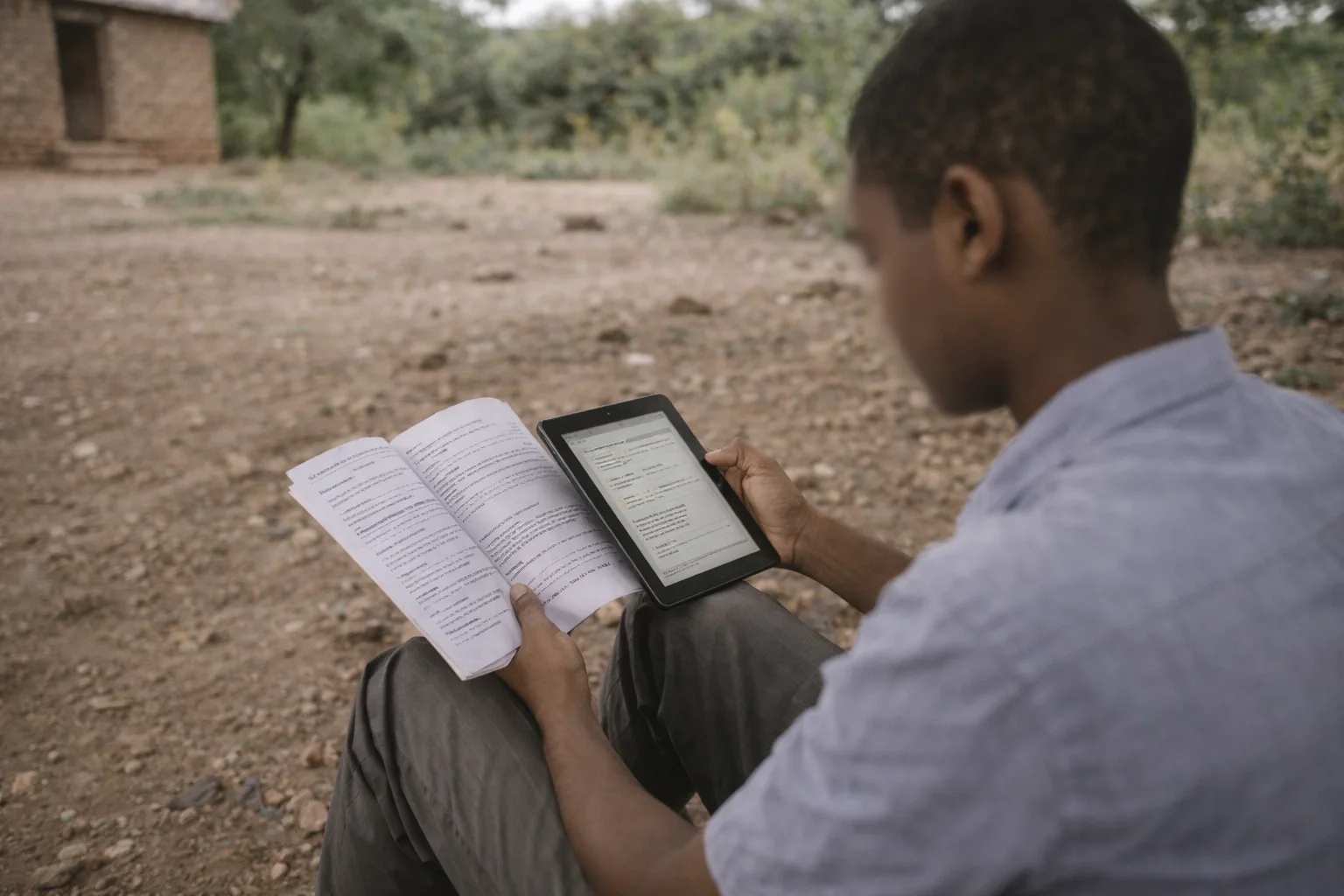
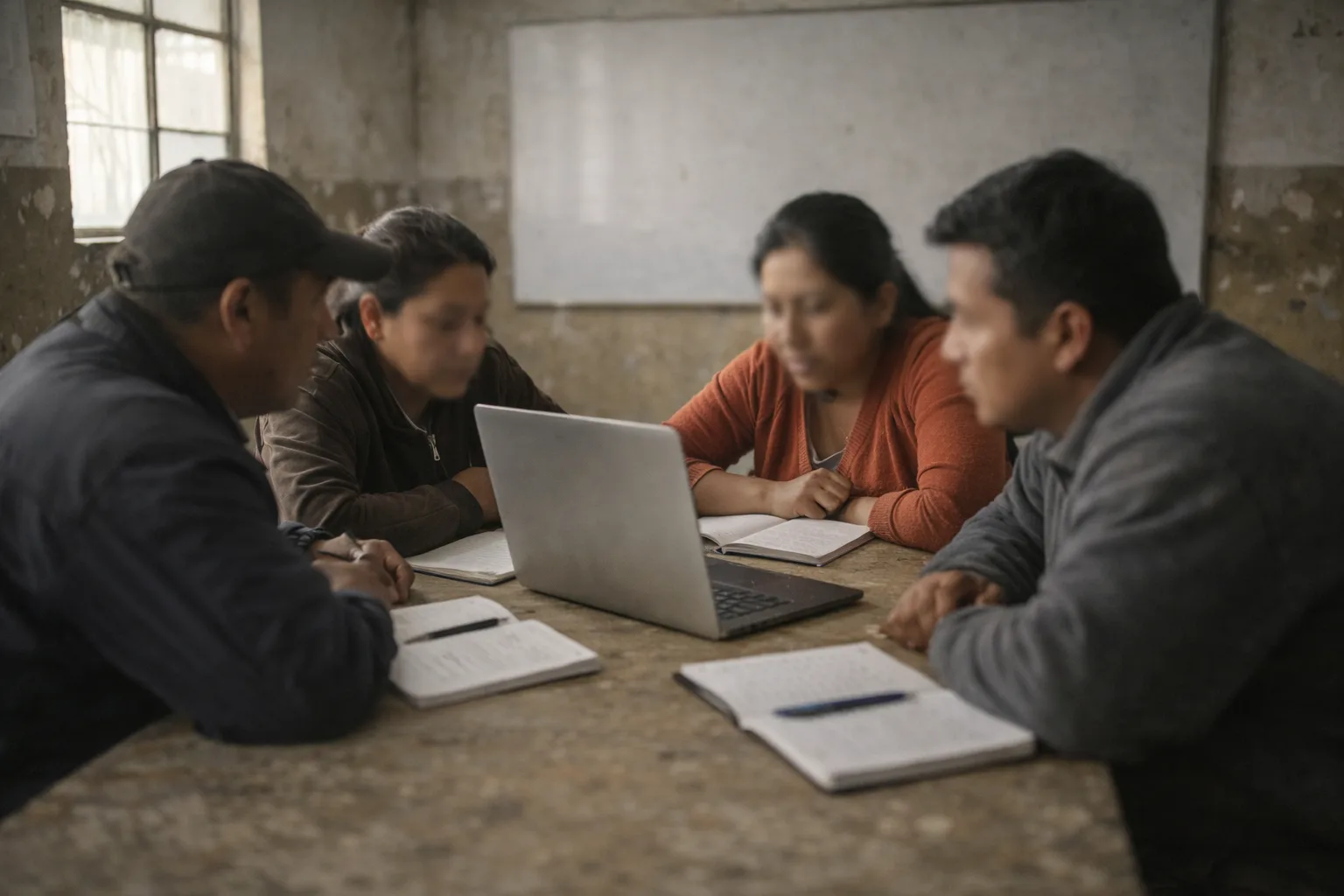

In this context, IM is not a substitute for schools, classrooms, or teachers. It is a supporting infrastructure layer intended to help institutions preserve access, structure, and guidance where conditions make traditional delivery difficult.
The purpose is continuity, not replacement; support, not automation; and access, not the erosion of institutional education systems.
Definition
IM as education infrastructure
IM (Intelligent Master) is designed as a public digital infrastructure component within DIPA, focused on structured learning, explanation, and reasoning across educational environments.
It exists to provide continuity in learning: maintaining consistent access to explanation and progression where differences in scale, access, or institutional capacity affect how education is delivered.
IM operates as an underlying layer within learning systems, organizing knowledge and supporting understanding without interrupting how education is already structured.
In this sense, IM belongs to the same class of systems as libraries, textbooks, and foundational learning environments — infrastructure that extends educational capacity rather than directing it.
Designed for long-term use, IM emphasizes clarity, stability, and consistency, enabling learning systems to function more reliably across varied conditions.
What IM represents
IM represents a shift from learning as a tool or service to learning as infrastructure: a stable foundation that supports how education operates without becoming the center of it.
Its value emerges through integration with learning environments, contributing to understanding, progression, and coherence over time.
As infrastructure, it strengthens the foundation of learning systems, extending their capacity while allowing education to remain human-led and context-driven.
Function
What IM actually does
IM supports learning by organizing knowledge, explaining concepts, and guiding learners through structured material in a consistent and reviewable way.
It focuses on explanation, progression, and reinforcement, helping learners build understanding step by step.
It presents complex topics in multiple ways, adapting structure and clarity so that learners can approach material from different angles until understanding is achieved.
Learners can revisit prerequisite concepts, strengthen weak areas, and continue progressing without losing coherence across topics.
IM maintains structured learning pathways, ensuring that knowledge develops logically rather than in isolated fragments.
Over time, it reinforces retention through consistent revision and guided review, helping learners build more stable and durable knowledge.
How IM is used
IM is used within learning processes to support understanding across different stages of study, from initial explanation to revision and consolidation.
It enables learners to move through material at a pace that reflects their current level and context, while maintaining clarity and structure.
Across different learning conditions, IM provides consistency in how material is explained, revisited, and progressed.
Deployment
Where IM is used
IM is designed for environments where learning conditions vary due to differences in access, scale, resources, or continuity.
It can be deployed across formal education systems, supplemental learning programs, and institutional training environments.
In well-resourced settings, IM supports structured learning and reinforcement. In constrained environments, it helps maintain access to organized educational material where consistency is harder to sustain.
The system operates across both connected and low-connectivity contexts, including offline-first environments, without changing how learning is structured or experienced.
This allows deployment to scale from individual institutions to broader systems while adapting to local conditions and constraints.
Where IM fits
IM fits within a wide range of educational environments where structured learning support is needed.
In schools, it supports classroom learning where preparation levels and instructional resources vary.
In higher education, it assists in large or foundational courses where maintaining consistency across learners can be challenging.
In remote or underserved settings, it provides access to structured material where educational resources may be unevenly distributed.
In disrupted contexts, it helps maintain continuity of learning when conventional delivery is interrupted.
Ecosystem
IM in the DIPA ecosystem
IM operates as the learning and explanation layer within the DIPA (Digital Infrastructure for Public Access) ecosystem, focused on human-facing interaction with knowledge, concepts, and structured learning.
It exists alongside other public systems, contributing to the educational dimension of the broader infrastructure while remaining distinct in its role.
All interaction through IM occurs at the interface level, where learners and educators engage with structured material, explanations, and guided progression.
Other components within DIPA operate in parallel, supporting coordination, connectivity, and system-level functions without overlapping with the learning context in which IM operates.
This separation allows IM to remain focused on learning and understanding, while the broader ecosystem supports the conditions in which such systems can operate reliably at scale.
Within this structure, IM contributes as one part of a larger public infrastructure, aligned with other systems while maintaining a clear and distinct role. The sections below offer a closer view of the surrounding systems and their roles within the ecosystem.

DIPA Framework
The public digital infrastructure framework defining governance, role separation, and long-horizon institutional deployment.
LEARN MORE →
Ecosystem
The broader system landscape operating within the public infrastructure framework.
LEARN MORE →
System Architecture
The structural blueprint describing how systems are separated and coordinated.
LEARN MORE →
ICI
Interface and coordination layer connecting systems across the ecosystem.
LEARN MORE →
Governance
Oversight models and institutional structures across public systems.
LEARN MORE →Architecture
System architecture overview
IM is built as a modular, layered system designed for long-term reliability, maintainability, and adaptability across different educational environments.
The architecture separates user interaction, learning logic, knowledge representation, data storage, and supporting services into distinct layers. This separation allows each part of the system to evolve independently without affecting overall stability.
At the top, user-facing interfaces support students, teachers, and administrators. Beneath this, the learning and explanation engine manages progression logic, structured guidance, and educational workflows.
The knowledge layer organizes curriculum structures, concept relationships, and instructional content used for explanation and learning pathways.
The data layer maintains learning state, progress tracking, and content storage, supporting continuity across sessions and environments.
Supporting services provide authentication, synchronization, and operational reliability across deployments.
This layered design makes IM portable, maintainable, and adaptable across different infrastructure conditions.
View IM system architecture
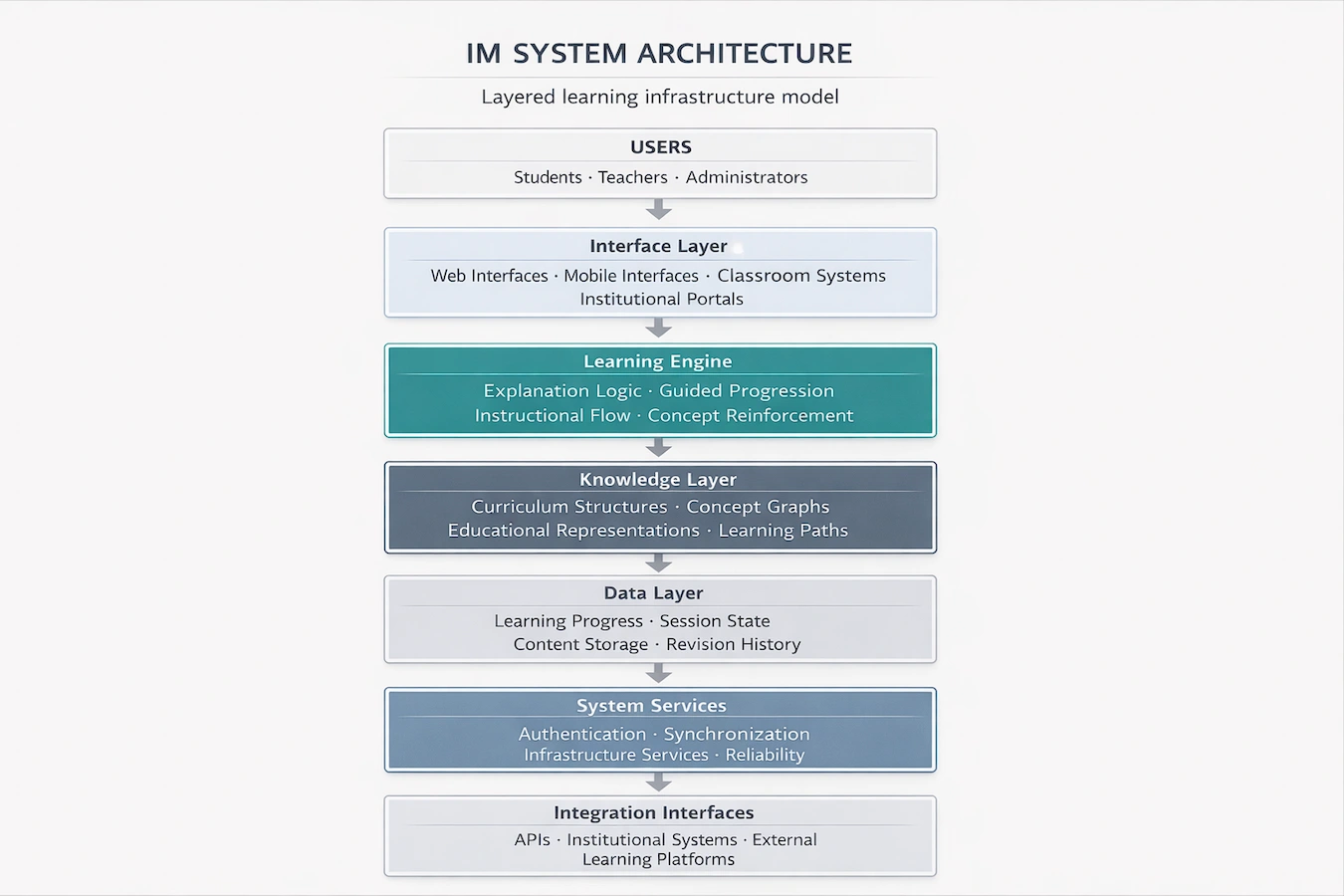
Layered architecture of IM showing separation between user interfaces, learning engine, knowledge representation, and infrastructure services. Each layer evolves independently while maintaining stable system operation.
How the system is organized
IM is structured as a set of clearly separated logical layers. Each layer has a defined responsibility and a stable interface to the layers around it, allowing the system to evolve without disrupting overall operation.
Interface layer. Student, teacher, and administrator interfaces provide access to learning content and system interaction.
Learning engine. Explanation logic, guided progression, and instructional flow structure how learning unfolds across topics.
Knowledge layer. Curriculum structures, concept relationships, and educational representations define the material available for explanation and navigation.
Data layer. Learning progress, session state, and content storage support continuity and long-term use.
System services. Authentication, synchronization, and supporting services ensure consistent operation across environments.
Integration interfaces. APIs enable connection with external systems and institutional platforms where needed.
This structure supports a stable and extensible system, allowing components to evolve while maintaining overall consistency.
Operational Flow
Learning Interaction Flow
While the architecture describes the structural layers of the system, the operational flow describes how a learning interaction travels through those layers during real use.
Each interaction follows a structured path that preserves instructional clarity, maintains learner progress records, and ensures that responses remain grounded in the curriculum knowledge model.
No component operates in isolation. Interface systems collect and normalize user input, the learning engine interprets instructional intent, and the knowledge structures supply the conceptual material required to generate guidance.
System services maintain identity, synchronization, and reliability, while institutional integrations allow the system to operate within existing educational environments.
View learning interaction flow
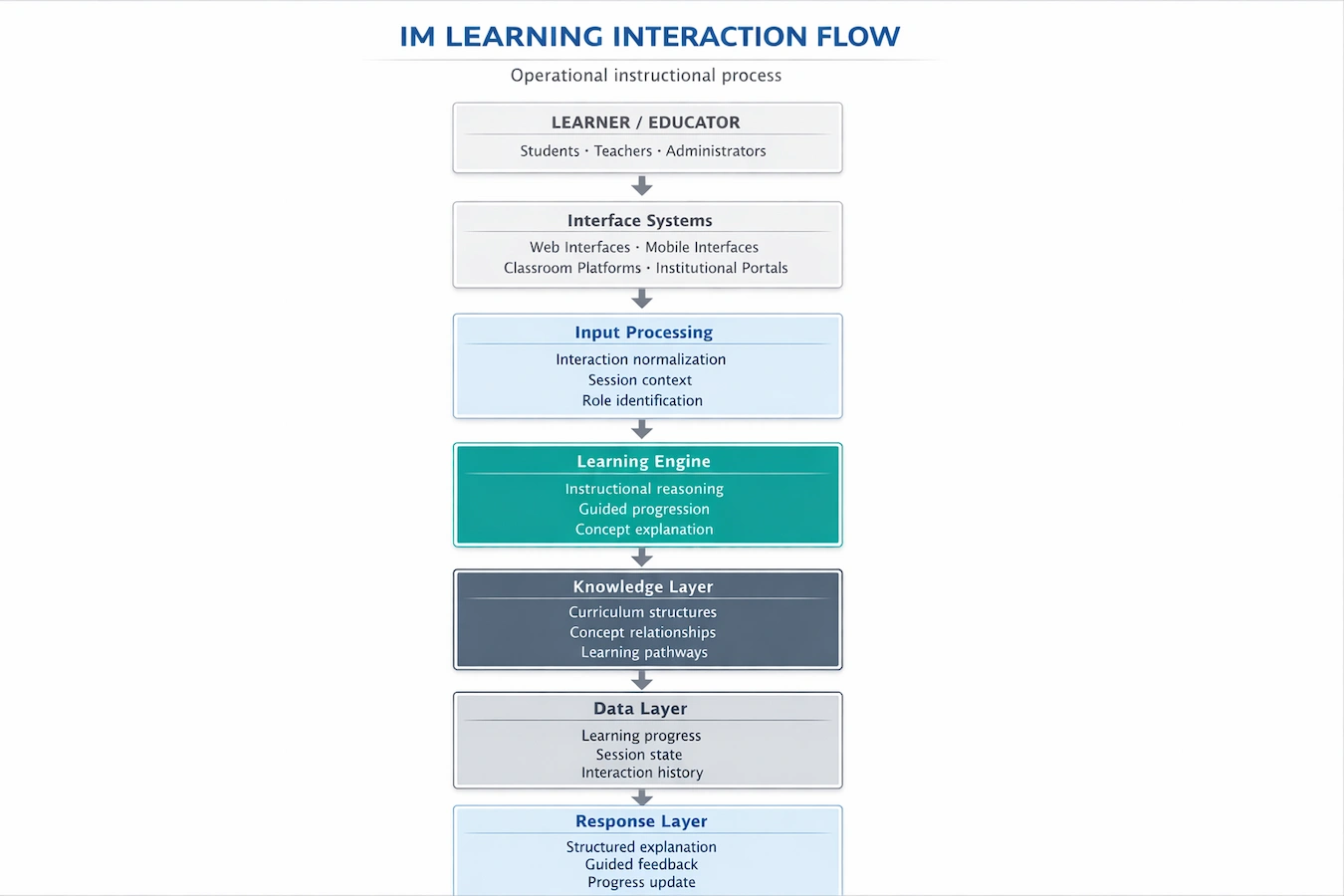
Operational interaction flow showing how learning requests move through interface systems, instructional reasoning, knowledge structures, and data recording before returning structured responses to the learner.
Operation
How IM operates
IM operates as a session-based learning support system. A learner enters a topic, lesson, or question, and the system guides them through structured explanations, examples, and related concepts.
Each interaction is interpreted within the context of the learner’s current position in the material. The system selects appropriate explanations, references prerequisite concepts when needed, and suggests a coherent next step.
Progress is recorded continuously. Learning state, topic coverage, and revision history are updated in the background so that sessions can be resumed, reviewed, or extended over time.
When a learner struggles with a concept, IM can change the explanation strategy: switching examples, simplifying the presentation, or stepping back to earlier material.
This operational model supports continuity, traceability, and consistency across learning sessions.
What happens in practice
A typical learning interaction follows a simple and repeatable sequence, supporting clarity and structured progression.
The interaction begins with entry: a learner opens a topic, lesson, or question within a learning environment.
IM then provides explanation, presenting structured material, examples, and guided reasoning aligned with the selected topic.
When needed, explanations adjust in depth, approach, or prerequisite level to maintain clarity and support progression.
Progression follows naturally, with related concepts, exercises, or next steps suggested based on the learner’s current position.
Learning state and revision history are recorded so that sessions can be resumed, reviewed, and extended over time.
This structure enables consistent learning support across different stages and conditions.
Deployment
Deployment model
IM is designed to operate across a range of deployment environments, supporting structured learning access in both institutional and open-access contexts.
It can be hosted at different levels — individual schools, districts, universities, or broader public systems — while also supporting direct-access environments where learners engage independently.
The system functions across both connected and constrained conditions, including low-bandwidth and offline-first environments with synchronization where available.
In institutional settings, IM integrates with existing educational systems and workflows. In open-access contexts, it remains accessible without requiring centralized control or mandatory user identification.
This flexibility allows IM to adapt to different educational conditions, scales, and modes of access while maintaining consistency in how learning is structured and delivered.
How it can be hosted
IM supports multiple deployment approaches, allowing it to operate across institutional, public, and independent access environments.
In institutional deployments, IM is operated within schools, universities, or public systems, where configuration, content, and integration align with local educational structures.
At larger scales, regional or national deployments can support coordinated learning access across multiple institutions and educational networks.
IM can also be provided through open-access environments, where learners engage directly without mandatory profiling or personal data requirements, allowing flexible and self-directed use.
For low-connectivity or remote contexts, offline-first deployments support local operation with optional synchronization, maintaining continuity across varying infrastructure conditions.
Hybrid models combine these approaches, enabling movement between institutional and open-access environments while preserving consistency in learning experience.
Across these forms, IM adapts to context rather than imposing a single deployment structure, supporting both organized systems and individual access pathways.
Governance
Institutional context & oversight
IM operates within established educational and institutional contexts, where curriculum, assessment, and learning standards are defined by schools, universities, and public systems.
Its role is focused on supporting structured learning, while educational direction, evaluation, and policy remain part of institutional processes.
Detailed governance frameworks, operational boundaries, and oversight structures are defined within the broader DIPA documentation.
Evolution
Roadmap & evolution
IM evolves through a staged development model, progressing from a working prototype to broader educational infrastructure over time.
The initial phase focuses on establishing a functional system: a core learning engine, limited subject coverage, and reliable operation in real environments.
As the system matures, capabilities expand to include additional subjects, improved learning depth, multi-user environments, and integration with institutional systems.
Later stages support wider deployment across regions and education networks, with increasing emphasis on coordination, performance, and system scalability.
Over time, IM develops into a broader learning infrastructure, capable of supporting diverse educational systems while maintaining consistency in structure and operation.
How IM grows
The evolution of IM follows a clear progression across multiple stages, each building on the capabilities of the previous one.
Phase 1 - Foundation. A working system is established with core learning functionality, a limited subject set, and stable local operation.
Phase 2 - Institutional use. The system expands to support real educational environments, adding multi-user capabilities, teacher workflows, and improved reliability.
Phase 3 - Regional scale. Multiple institutions can be connected, enabling shared infrastructure, coordinated updates, and broader access across systems.
Phase 4 - National systems. IM supports large-scale deployment with localization, performance optimization, and alignment with national education structures.
Phase 5 - Global network. The system evolves into an interconnected learning infrastructure, supporting interoperability and knowledge exchange across regions.
Each stage extends capability, scale, and reach while maintaining continuity in how learning is structured and delivered.
Publications
IM Documents & References
These are the core, canonical documents defining the purpose, structure, and institutional role of the IM system. Detailed technical, research, and review materials are available in the full Research and Whitepapers libraries.

IM Whitepaper
Canonical description of IM’s purpose, scope, and role within the public education infrastructure.

IM & DIPA
Institutional positioning of IM within the Digital Infrastructure for Public Access framework.

IM Research Paper
Research framing, evaluation criteria, and institutional assessment model for IM.

Research Library
Browse all analytical, conceptual, and institutional research related to IM.
EXPLORE →
Whitepapers Library
Browse the complete technical and architectural documentation archive.
EXPLORE →Engagement pathways
Research participation pathways
Research contributions are welcomed from institutions, universities, and professionals, alongside early-career individuals beginning or advancing their work in public systems, safety, and governance.
For those developing their path, this environment offers a structured way to engage with real-world systems, contribute to ongoing work, and build experience within a long-horizon public framework.

Institutions & Public Authorities
Ministries, courts, public agencies, regulators, and policy bodies engaging in research, evaluation, or institutional alignment.
Open Pathway →
Universities & Research Institutions
Academic institutions, public research bodies, and policy institutes interested in structured collaboration and peer-oriented research.
Open Pathway →
Expert Participation & Stewardship
Senior engineers, architects, researchers, and public-service experts contributing experience, review, and long-horizon guidance.
Open Pathway →Contributions are shaped through real work, shared responsibility, and continued engagement over time. This environment is built for those who want to develop, contribute, and remain part of a long-horizon public effort.
Review
Public & institutional review
This section provides a pathway for institutions, professionals, and members of the public to share observations, raise concerns, and contribute to ongoing review of IM.
Inputs may relate to clarity of explanations, procedural alignment, boundary conditions, or real-world use within justice environments. Submissions are considered as part of continuous system refinement.
Contributions support long-term stability, clarity, and responsible operation across different contexts.
Public Systems
Civic infrastructure,
anchored in institutions
ARMI’s public systems operate across education, justice, and medical safety, each addressing a distinct public domain within a shared infrastructure.
Explore related systems to understand how different domains connect and function together within a broader public framework.

JARS - Justice Access Infrastructure
Rights and legal support systems designed to assist institutional clarity while preserving fully human judgment.
Learn More →
MESA - Medical Evidence Safety Infrastructure
Preventive evidence coordination designed to reduce harm caused by fragmented clinical systems and incomplete safety context.
Learn More →
KIM - Child Knowledge & Learning Architecture
Public child-centered learning infrastructure built for continuity, safety, and trusted institutional guidance.
Learn More →Closing note
Built for continuity, over time
IM is designed to exist quietly within learning environments, supporting understanding and progression as part of everyday education.
Its value is not in visibility, but in consistency, helping learning remain clear, continuous, and accessible across different conditions.